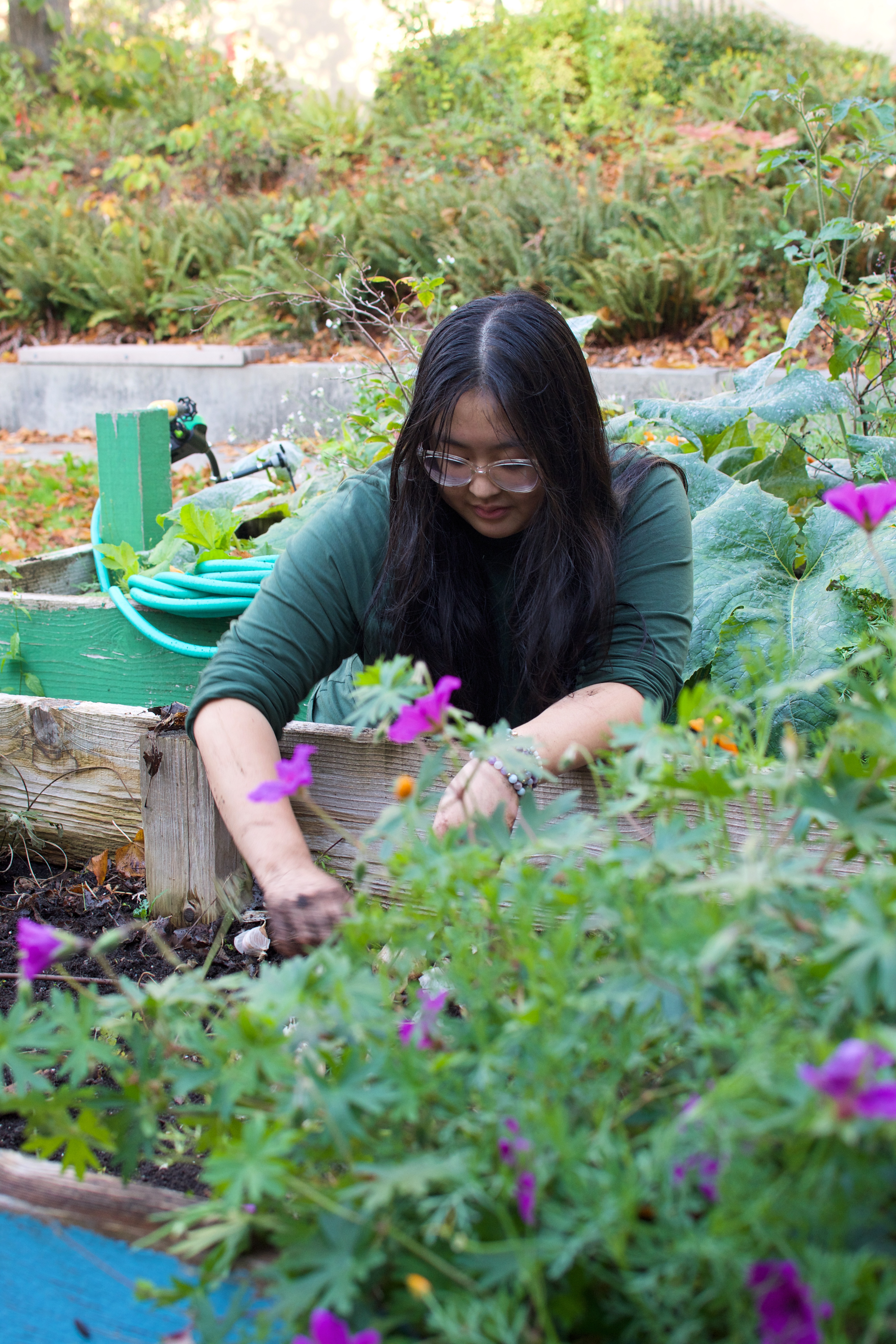


“I have been gardening intensively in my great grandma’s backyard (I live in an apartment where we’re not allowed to modify the outdoor space, so I’ve been invading her house with my plants for the past half-decade) for about five years now. I’ve been the manager of the Geography Geo-garden for three.”
I have been gardening intensively in my great grandma’s backyard (I live in an apartment where we’re not allowed to modify the outdoor space, so I’ve been invading her house with my plants for the past half-decade) for about five years now. I’ve been the manager of the Geography Geo-garden for three.
While gardening started as a hobby and opportunity for mental quietude during some hectic times of my life, it has since evolved to become a core component of my life. I mean it earnestly when I say I intend on gardening until the day I die, which is perhaps a little intense but it’s true. While the first few years were more experimental, and I made a lot of mistakes, I quickly grew quite interested in the actual science behind it all, from fertilizer ratios, soil health, composting, to plant biology itself. I remember in the early days, when I would spend hours on Youtube soaking up all the organic gardening wisdom out there, on how to best care for your plants in a way that maximized yield, while still ensuring your garden space would remain hospitable to thriving ecosystems of pollinators, birds, and other beneficial creatures.
When it comes to urban gardening, I think we live in a time where knowledge is the most accessible it’s ever been, but land is especially hard to come by, particularly for those living in apartments with strata-regulated outdoor space – I myself only have consistent access to a garden through relatives, and in that sense, generational wealth. Though there are certainly community gardens or smaller forms of gardening, like windowsill or patio gardening, they all suffer issues with scale, especially if one of your goals is to supplement your diet with home-grown produce.People I’ve spoken to in my community have mentioned they’ve been on the waitlist for a community garden plot for four years — the old lady who told me this jokingly said she was worried she’d kick the bucket before it was her turn to garden. Even once you get off the list, space is incredibly limited per plot, making it hard to grow everything you want to. Most plots I’ve seen are only about 1 x 0.5m, which is tough to do a lot with.
While windowsill and patio gardening can be productive, the limiting factor for those methods is usually the amount of sunlight you’re getting. For instance, my current apartment only has north-facing windows which receive hardly any natural light, meaning I’d have to invest a hefty amount into LED plant lights (which also take up a lot of space) if I wanted to pursue gardening there. One other restriction posed by gardening in a small space is pest and disease buildup. In large-scale agricultural systems, crop rotation is normally advised so these don’t build up. When working in urban gardens, however, moving around your plant species is oftentimes not possible as you have so little room to work with, making outbreaks a potential threat that may wipe out your entire yield. If that happens (which it certainly has for me) I just have a good cry, be thankful I’m not a medieval peasant who will die if the harvest fails, and I try again next year.
Once you do have reliable access to a fair amount of land, though, with the right knowledge and hard work, the garden can very quickly transform into the gift that keeps on giving. In my great grandma’s back yard, we only use about 15m2 to garden (and we haven’t really dug into the soil very much, we’ve just built planter boxes on top of the cement portions of her back yard), we grow ~50 cloves of red russian garlic, enough to last us the entire 9 months between harvests. We grow enough to A) replant a portion of the bulbs to grow into next year’s garlic, B) share with friends and family, and C) consume ourselves (and we are heavy garlic eaters). We grow a variety of fruits, herbs, and vegetables, and in the past few years we’ve grown enough leafy greens where we completely do not have to buy salad from the grocery store anymore during the summer months (which is great, because salad greens are the most expensive produce by weight!). I’ve also in the past grown 72lbs of potatoes, which mostly go to my potato-crazed sister’s french fry addiction.
During the summer months, I use a drip-irrigation system on a timer to water the plants, both in my personal and the Geo-garden. This means I don’t have to come by and water every day. Drip irrigation systems also save on water (and prevent disease caused from overly moist environments), compared to watering with a hose or a sprinkler, as they slowly release small “drips” of water into the soil, which are better absorbed than a massive influx of water all at once.
Overall, I appreciate the garden not only as a source of inspiration and joy, but also for how it lowers our spending on groceries while encouraging a more varied diet of unique produce that we normally wouldn’t have consumed otherwise — watercress, the most nutrient-dense vegetable for instance, is a regular staple of my meals now, but most people wouldn’t think to pick it up from the grocery store, for instance. I really don’t think there’s anything quite as rewarding as having a fridge full of home-grown produce, or eating a meal where all of the vegetables came from your garden – the fruits of your labour!


Leave a Reply